
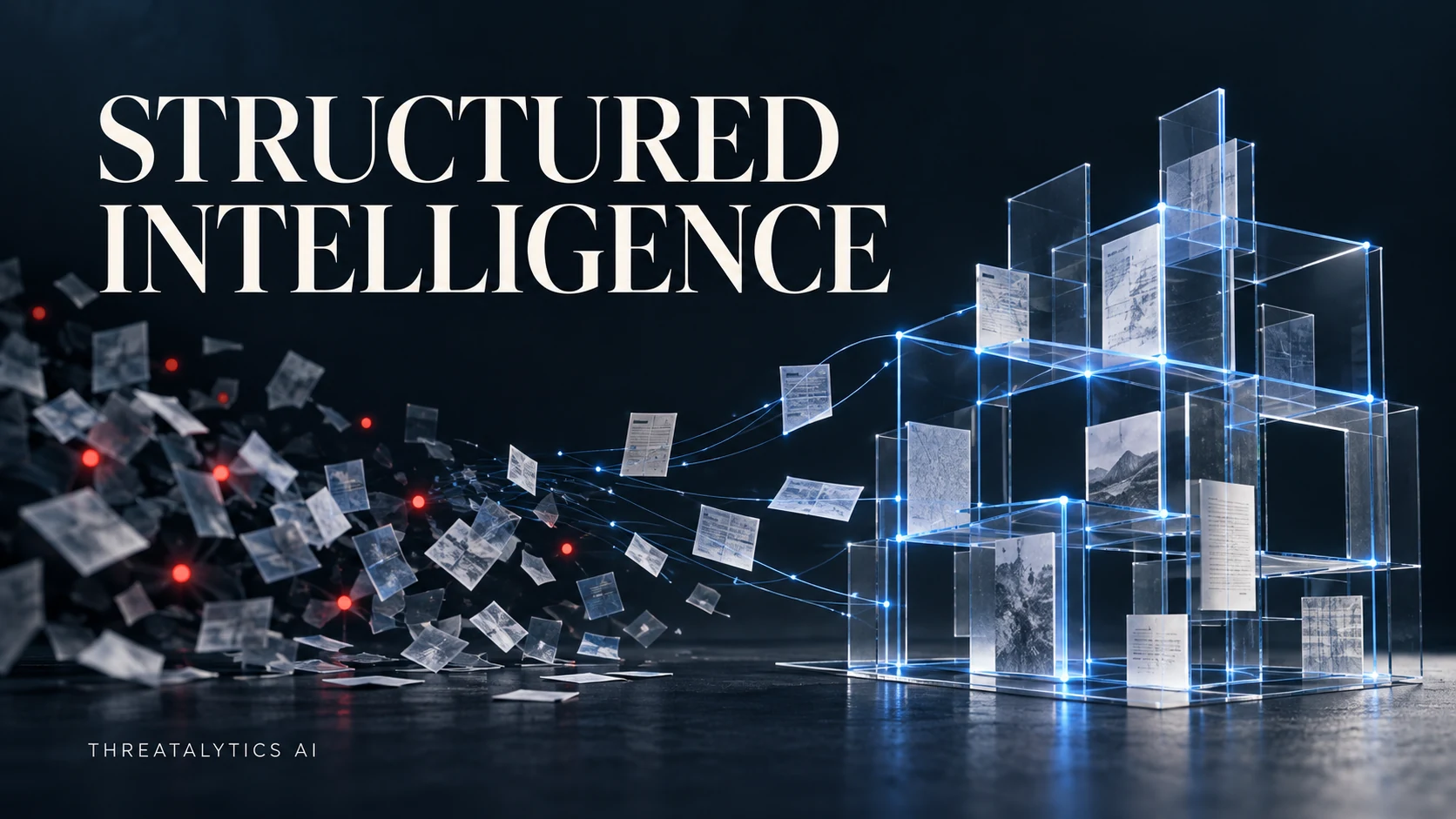
The longer I spend in the prevention space, the more I find myself thinking about the relationship between Structured Professional Judgment and what I have started to call Structured Intelligence. That reflection comes from respect for SPJ and the discipline it brings to difficult decisions. It gives professionals a structured way to examine concerning behavior, weigh context and protective factors, and explain their reasoning under conditions of uncertainty.
But I keep returning to a problem that sits upstream from the judgment process itself. Over the years, I have reviewed case studies, after-action reports, and investigations involving targeted violence across schools, workplaces, healthcare environments, and community settings. The circumstances differ, but a recurring theme deserves attention: information that later helped explain a developing concern had existed before the incident, dispersed across people, departments, systems, and points in time.
One person may have observed a grievance taking shape. Someone else may have noticed a change in behavior. A colleague may have documented a troubling interaction, while a family member became concerned about online activity. A peer may have heard a statement that seemed vague on its own but took on a different meaning when examined alongside other information.
After an incident, investigators may be able to assemble those accounts into a more coherent story. Before it, the same observations may have remained disconnected. We have to be careful with that comparison. Hindsight gives investigators knowledge that people making decisions at the time did not have. A reconstructed narrative does not establish that every observation was accessible, that violence was foreseeable, or that a particular intervention would have prevented it. What it can reveal is whether relevant information had a dependable route to the people responsible for reviewing it.
The information environment shapes the assessment
Observations are not intelligence. Data is not intelligence. Information is not intelligence. I use intelligence here to mean information that has been organized, evaluated, and placed in context so it can support a decision. A collection of reports can contain important facts and still leave a team struggling to understand how those facts relate, how reliable they are, and what questions remain unanswered.
When we examine a prevention failure, the problem is not necessarily a lack of professional judgment. A team may have made a reasonable decision based on the information it received while another department held details that could have changed the review. In that situation, improving the assessment framework alone will not resolve the missing handoff.
We spend considerable time training teams to recognize warning behaviors, evaluate risk factors, consider protective factors, and document their decisions. Those efforts matter. The same attention needs to reach the information environment around the team: how concerns are reported, who receives them, how context is preserved, and how authorized reviewers learn that separate reports may involve the same developing situation.
Even careful judgment cannot evaluate an observation that never reaches the assessment process. Nor can it reliably distinguish three independent accounts from three repetitions of the same story if the original source has been lost. The quality of the information matters as much as its availability.
Structure the intelligence as well as the judgment
I use Structured Intelligence to describe a deliberate approach to organizing that work. It means preserving the source of an account, distinguishing observation from interpretation, placing events in sequence, examining possible connections, and keeping material gaps visible. I am describing an operational approach that supports assessment, not proposing a new validated assessment instrument.
SPJ approaches can guide information gathering as well as interpretation. The distinction I am drawing is practical: an assessment framework does not, by itself, make a reporting channel accessible, ensure that an inbox is monitored, or establish a reliable handoff between HR, security, and other team members. Those conditions require organizational decisions, clear responsibilities, and follow-through.
That is why I see Structured Intelligence and Structured Professional Judgment as complementary parts of a prevention system. Organizing information gives professionals a stronger basis for examining the situation. Their judgment, in turn, identifies what else needs to be clarified, verified, or reconsidered. The work moves in both directions. Information gathering informs assessment, and assessment directs further inquiry.
Neither side removes the need for the other. Bringing reports together without disciplined interpretation can produce noise, exaggerated concern, or a convincing but poorly supported narrative. Applying a strong judgment framework to incomplete information can leave important questions undiscovered. More information is not automatically better information, and a longer case summary is not necessarily a better assessment.
The useful objective is a working picture that is relevant, traceable, and honest about its limits. A team should be able to see what is known, who reported it, what remains uncertain, and which missing details could materially change its response. That picture will usually be incomplete. The aim is to improve the basis for a decision, not to wait for perfect knowledge.
Better integration requires boundaries and responsibility
Strengthening this part of prevention does not require a surveillance culture or treating every unusual behavior as a threat. It requires responsible ways for people to raise relevant concerns and for authorized professionals to review them in context. Legitimate privacy and access limits remain part of that work. Information that cannot appropriately be shared should not become available simply because a team would find it useful.
Good integration should also make it easier to recognize when concern is unsupported or when another explanation is more plausible. A grievance is not proof of violent intent. A change in behavior does not establish a pathway toward harm. Context can increase concern, reduce it, or show that the team needs a different kind of response. If a process only produces escalating conclusions, it is not testing the information carefully enough.
These responsibilities continue after the review. Someone needs to own the next step, understand what would trigger reassessment, and preserve the reasoning behind the decision. An organized case narrative has limited value if the agreed follow-up disappears between departments or new information never reaches the people managing the situation.
For me, this is an important opportunity in the evolution of threat assessment. We have invested substantial effort in assessment methodologies. We should bring comparable discipline to the reporting, coordination, and information development that allow those methodologies to work in practice. The FBI’s Making Prevention a Reality provides useful guidance on reporting mechanisms, information gathering, and the gaps that organizational silos can create.
At Threatalytics AI, this is the work we are focused on supporting. Assistive intelligence can help organize information supplied for review, preserve distinctions between reported facts and interpretation, and make decision-relevant gaps easier to examine. It cannot recover an unreported concern or replace the professionals responsible for verifying information, assessing significance, and deciding what action is appropriate.
Structured Professional Judgment remains essential. If we want prevention systems that are more capable, consistent, and accountable, we also need to be serious about the information environment supporting that judgment. The question is not simply whether the team has a sound framework. It is whether the organization gives that team a dependable opportunity to use it.
Does this sound familiar?
Has your team been missing important context?
Has your team worked carefully through an assessment, only to learn later that relevant information never reached the room? A sound framework still needs dependable reporting and a usable account of the situation.
Talk with us about the information gaps your team encounters and whether Threatalytics AI could help organize the material available for professional review.
Talk Through Your ChallengeAbout this essay
Adapted from Jason Destein’s June 4 essay. This version was published on October 29, 2026. “Structured Intelligence” describes the author’s approach to organizing information for professional review. For further reading on reporting and information sharing, see the FBI’s Making Prevention a Reality (2017), especially pp. 14, 43–44, and 76. The publication does not endorse Threatalytics AI.