
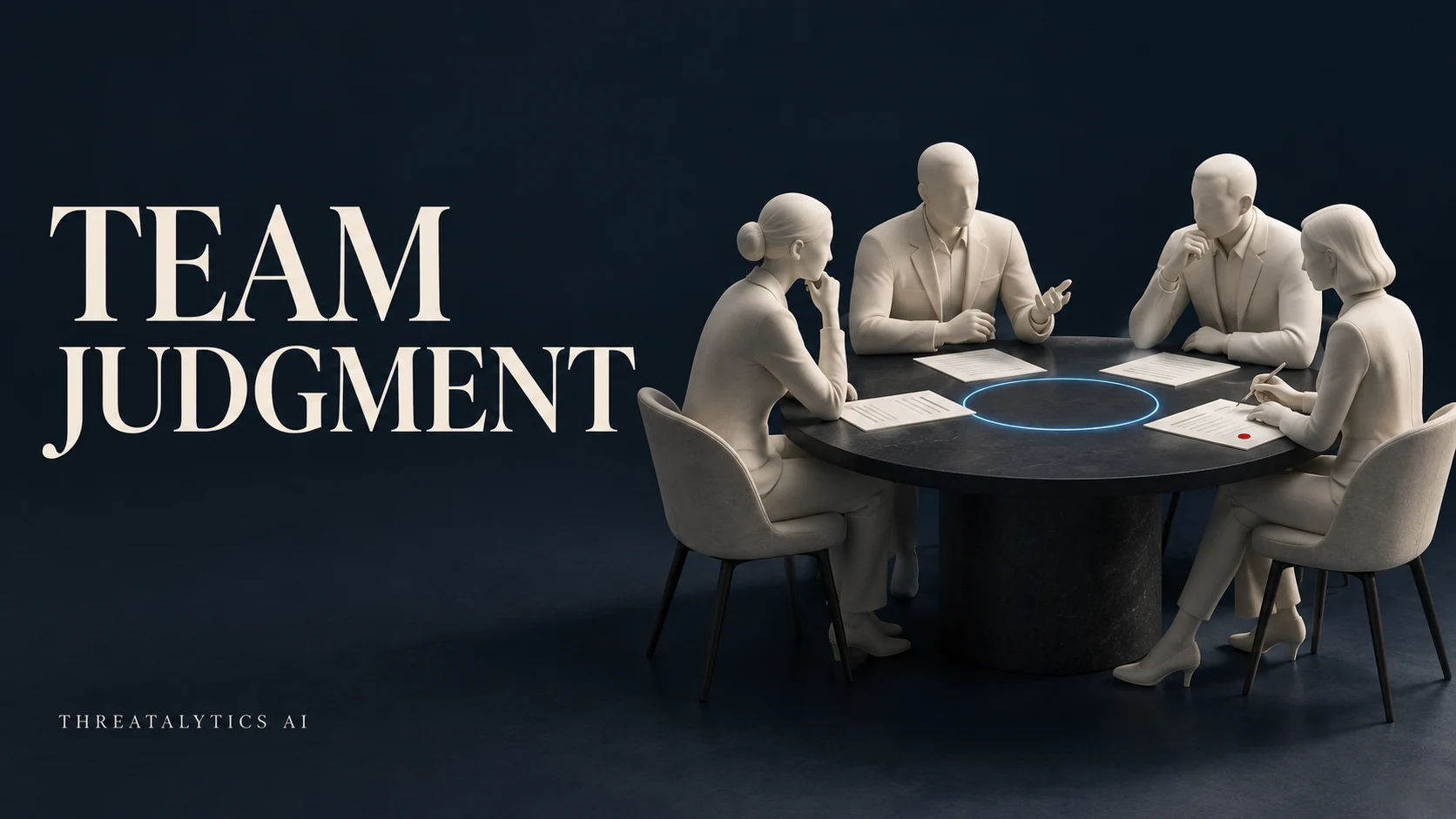
For years, being part of a threat assessment team has meant working through uncertainty. The behavior may be ambiguous, the accounts incomplete, and the people involved frightened, frustrated, or under considerable strain. The team still has to decide what needs attention, what remains unknown, and what action is appropriate.
That responsibility has not become easier. What gives me reason for optimism is the opportunity to improve the work around it. We can become more deliberate about how information reaches a team, how it is organized for review, and how the reasoning behind a decision is preserved. Assistive intelligence may have a useful role in that improvement, provided we are clear about what we expect it to do and what remains a human responsibility.
I see a better future for threat assessment teams because their expertise can be supported more effectively. That is a more useful proposition than promising that technology will make uncertainty disappear.
Give expertise room to work
A team can have capable professionals and still struggle with the practical demands of a case. Information arrives through HR reports, tips, supervisor conversations, security records, and other authorized channels. It may concern the same situation without using the same language or reaching the same reviewer. Before the team can assess significance, someone has to establish a sequence, trace the sources, and identify which accounts need clarification.
That work is essential. It also competes with the time people need for interviews, deliberation, support planning, and follow-up. When members carry assessment responsibilities alongside their primary jobs, the administrative burden can become a constraint on the team’s ability to work consistently.
Capacity is not the only explanation for a weak process. Training, authority, leadership support, reporting arrangements, and access to appropriate resources matter too. A tool cannot compensate for all of them. It can, however, be evaluated against a specific task: does it help the team prepare a clearer working account without losing the uncertainty or context that professionals need to examine?
That is where the conversation about AI should begin. A system that produces more text is not necessarily making the team more capable. The value has to show up in work that reviewers can check, use, and improve.
Structure supports judgment when the sources remain visible
Within Threatalytics AI, THREATI is the name we use for the assistive intelligence supporting that work. The name stands for Targeted Harm Recognition: Ethical Assistive Threat Intelligence. Its role is to help structure information supplied for review, surface decision-relevant gaps, and support a neutral account of the situation. It is not the person or team responsible for deciding what a report means or what should happen next.
Consider a team reviewing a workplace grievance. An initial account describes a difficult conversation. A later report describes questions about a manager’s schedule. Another account concerns an access event. Putting the accounts in order may help the team ask whether there is a meaningful connection. It may also expose differences in dates, uncertainty about the person involved, or an explanation that reduces concern. The sequence is a starting point for inquiry, not proof of a developing attack.
The team needs to distinguish what someone directly observed from what another person inferred. It needs to know whether apparently separate reports came from independent sources. It also needs to examine relevant protective factors, conflicting information, and changes that may suggest the situation is stabilizing.
Assistive intelligence can help make those distinctions easier to review. It can also get them wrong. A fluent summary may introduce an unsupported connection, omit a qualifying detail, or make uncertainty sound settled. Human review must reach back to the underlying information rather than accepting a polished narrative as evidence of accuracy.
The goal is a stronger basis for professional discussion. Whether the tool saves time or improves consistency should be tested in the organization’s workflow. Those benefits should not be assumed simply because the output is fast or reads well.
Follow change without forcing a pathway
A single assessment captures what is known at a particular point. Teams also need a dependable way to reconsider that assessment when behavior, circumstances, access, or available support changes. A newly reported event may alter the response. So may reliable information that undermines an earlier concern.
Looking across time can help reviewers identify questions that a snapshot leaves unresolved. Has the behavior changed? Are the reports becoming more specific? Does the account involve a particular person or location? What alternatives or supports remain available? The answers need evidence and context. A grievance does not inevitably lead to planning, and an apparent pattern may turn out to be a mistaken connection.
This is why structured review must allow concern to decrease as well as increase. A process that only highlights escalation can steer a team toward the conclusion it expects to find. Professional judgment includes testing that conclusion and recognizing when a different explanation is better supported.
The organization still owns the reporting channels, the permissions governing information use, and the actions agreed after review. THREATI cannot recover an unreported concern, independently verify an account, or ensure that someone carries out a follow-up task. Privacy, fairness, and appropriate access require organizational controls and professional practice. They cannot be guaranteed by the name or intentions of a tool.
That leaves a practical opportunity for teams willing to evaluate assistive intelligence carefully. Begin with fictional or appropriately prepared information, establish what good work looks like, and examine where the tool helps or introduces friction. Ask whether reviewers can trace the summary to its sources, see important gaps, and explain why they agree or disagree with its suggestions.
The optimism I feel about this field rests on that kind of disciplined adoption. We can give professionals better support without surrendering their responsibility. We can organize information more clearly without claiming to predict an individual’s behavior. And we can judge a tool by its contribution to the work rather than the confidence of its presentation.
Threat assessment has always depended on people willing to take difficult information seriously and act proportionately. There is a real opportunity to strengthen the conditions in which they do that work. That is the role I want Threatalytics AI and THREATI to serve: supporting the team’s capacity to review, question, document, and decide.
Does this sound familiar?
Is preparation crowding out professional review?
Does your team spend so much time assembling reports and reconciling notes that there is less time for discussion, clarification, and follow-up? That workload is worth examining alongside the tools and resources available to your team.
Talk with us about the tasks consuming your team’s attention. We can explore whether Threatalytics AI fits your workflow and where it may offer useful support.
Talk Through Your ChallengeAbout this essay
Adapted from Jason Destein’s April 28 essay, “There Has Never Been a Better Time to Be Part of a Threat Assessment Team.” This version was published on October 29, 2026. The workplace illustration is fictional.